Essential Digital Skills Vector Template Guide
Visualizing abstract concepts like digital literacy requires more than just text; it demands structured, scalable graphics that communicate complexity with clarity. The Essential Digital Skills Vector Template serves as a foundational design asset for translating technical competencies into accessible visual narratives. Whether you are building a corporate training deck, an educational blog post, or a freelance portfolio, this template provides the architectural framework needed to present data effectively. It is not merely a collection of shapes but a systematic approach to organizing information through process timeline charts, workflow layouts, and linear iconography.
Why Visual Structure Matters Across Audiences
Digital skills are universal, yet the way we communicate them varies drastically depending on who is listening and who is speaking. A marketing manager presenting to stakeholders has different needs than a hobbyist blogger explaining tech tips to peers. The value of a high-quality vector infographic template lies in its adaptability. It bridges the gap between raw data and human understanding, allowing diverse users to tailor the message without reinventing the design wheel every time.
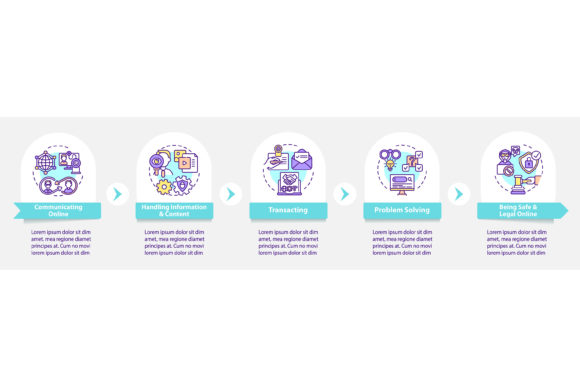
For professionals and business owners, time is often the most critical resource. Creating custom data visualization from scratch can consume hours of billable time or delay project launches. By utilizing pre-structured assets like the 5-step data visualization chart included in these templates, teams can maintain brand consistency while accelerating production. Conversely, educators and trainers prioritize pedagogical clarity over speed. For them, the linear icon workflow is not just an aesthetic choice but a cognitive tool that helps students retain complex sequences by breaking them down into digestible visual milestones.
Evaluating Quality and Technical Flexibility
When selecting a template for digitalization presentation design elements, technical specifications directly impact long-term usefulness. The availability of multiple file types—JPG, EPS, PNG, SVG, and AI—is not redundant; each format serves a distinct purpose in a modern content workflow.
- AI (Adobe Illustrator) and EPS: These are the source files essential for designers and agencies. They allow for infinite scaling and deep customization, enabling users to adjust colors, stroke weights, and typography to match specific brand guidelines perfectly.
- SVG (Scalable Vector Graphics): Crucial for web developers and bloggers, SVGs ensure that infographics remain crisp on retina displays and mobile devices without inflating page load times. Unlike raster images, SVG code can be styled with CSS, making the template responsive to dark mode or theme changes.
- PNG and JPG: These serve immediate needs for social media managers, internal communications, and non-designers. While they lack editability, they provide instant usability for platforms where vector support is absent.
Beyond file formats, the quality of the vector paths matters significantly. Poorly constructed vectors with open paths or excessive anchor points can cause rendering issues when resized or exported. A professional-grade Essential Digital Skills Vector Template ensures clean geometry, organized layers, and logical grouping, which reduces frustration during the editing process and ensures reliability across different software environments.
Practical Applications for Different Skill Levels
The utility of this template shifts based on the user's proficiency and end goal. Understanding these nuances helps determine if this specific asset aligns with your current project requirements.
For Beginners and Non-Designers
If you lack formal design training, the primary priority is ease of use and structure. You likely do not need to redraw icons but rather need a reliable layout to drop your content into. The workflow layout with linear icons acts as a scaffold, removing the guesswork associated with alignment and spacing. Beginners should focus on the PNG or JPG versions for quick implementation or use user-friendly tools like Canva or Figma that can import SVG/EPS files. The goal here is confidence; having a professionally designed base allows you to focus on the accuracy of your content regarding digital skills rather than worrying about whether your slide looks amateurish.
For Educators and Content Creators
Teachers, course creators, and instructional designers evaluate templates based on learning value and modularity. The 5-step process timeline chart is particularly relevant here. Digital literacy is rarely a single event; it is a progression. Being able to visually map out "Assessment → Learning → Practice → Application → Mastery" helps learners understand their journey. Creators in this space benefit from the AI/EPS files because they often need to repurpose the same visual system across worksheets, slide decks, and video thumbnails. Consistency builds trust and aids memory retention, making the flexibility of vector assets a high-priority feature.
For Marketers and Business Professionals
In a corporate context, the Essential Digital Skills Vector Template functions as a communication accelerator. Marketers and consultants often need to explain digital transformation strategies to clients or internal teams who may be resistant to change. Abstract jargon fails in these scenarios; clear, linear visuals succeed. The ability to quickly swap out generic icons for industry-specific symbols using the editable vector files allows for bespoke presentations without bespoke pricing. Here, commercial value and presentation quality take precedence. The template must look polished enough for a boardroom while being flexible enough to adapt to different client verticals.
Matching the Template to Your Goals
Before integrating this asset into your workflow, assess whether it solves your specific problem. Not every project requires a comprehensive vector suite. If you only need a static image for a single newsletter, a simple raster download suffices. However, if you are building a recurring series on digital upskilling, investing time in mastering the vector source files yields compounding returns.
Consider the longevity of your content. Digital skills evolve rapidly. A template built with editable vectors allows you to update terminology and icons as technology changes, protecting your investment against obsolescence. Raster-only templates, while cheaper or faster initially, become dead ends when your messaging pivots. Furthermore, evaluate the stylistic fit. Linear icons convey modernity, precision, and tech-forward thinking. If your audience associates digital skills with warmth and human connection, you might need to soften the template’s aesthetic through color and typography adjustments, which again highlights the necessity of editable vector formats.
Ensuring Accessibility and Inclusivity
A crucial aspect of using digital skills templates is ensuring they remain accessible to all users, including those with visual impairments or cognitive differences. When customizing the Essential Digital Skills Vector Template, prioritize high contrast ratios between icon strokes and background colors. Avoid relying solely on color to convey meaning within the 5-step data visualization; use numbering, labels, or distinct shapes to differentiate stages. Because SVG and AI files allow for precise control over these attributes, they are superior for creating inclusive materials compared to flattened images. Accessible design is not just a compliance checkbox; it expands your reach and demonstrates the very digital competence you aim to teach.
Ultimately, this template is a vessel for your expertise. Its effectiveness depends entirely on how well you leverage its structural advantages to serve your specific audience. Whether you are simplifying complex workflows for beginners or showcasing strategic roadmaps for executives, the combination of versatile file formats and thoughtful layout design provides the necessary toolkit to communicate essential digital skills with professionalism and clarity.